

Fujifilm X-H1
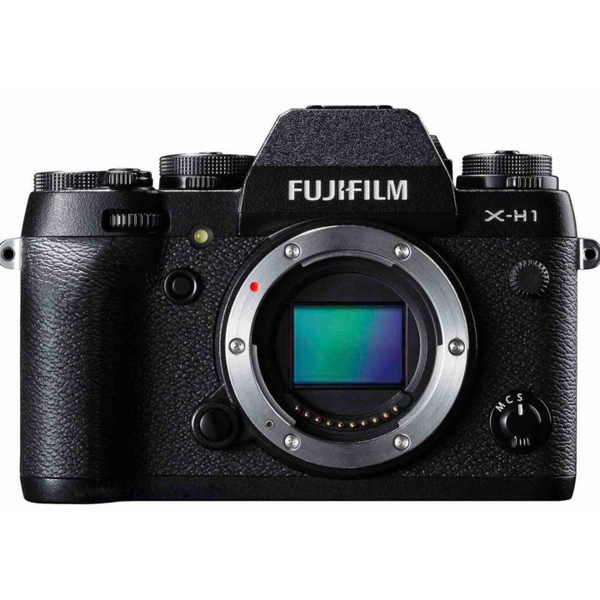
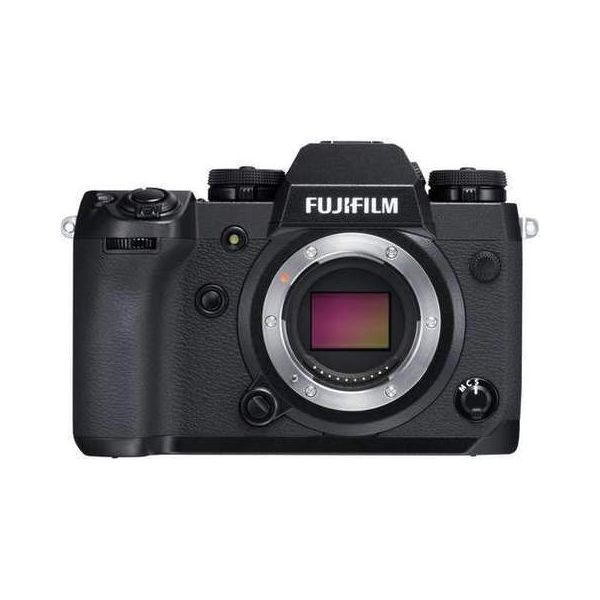
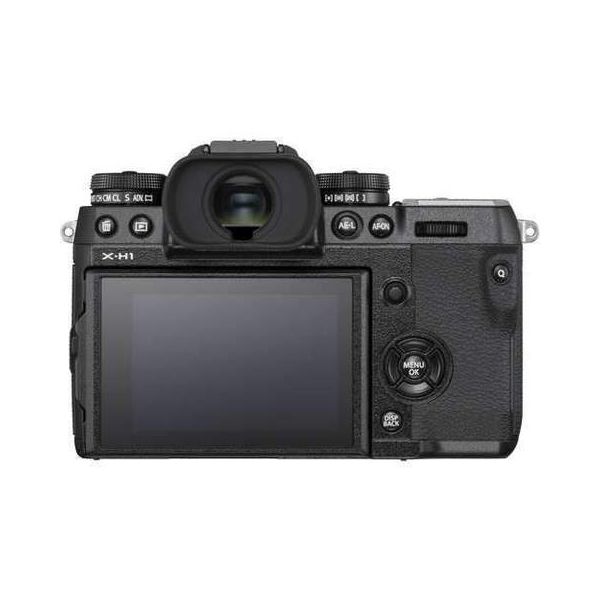
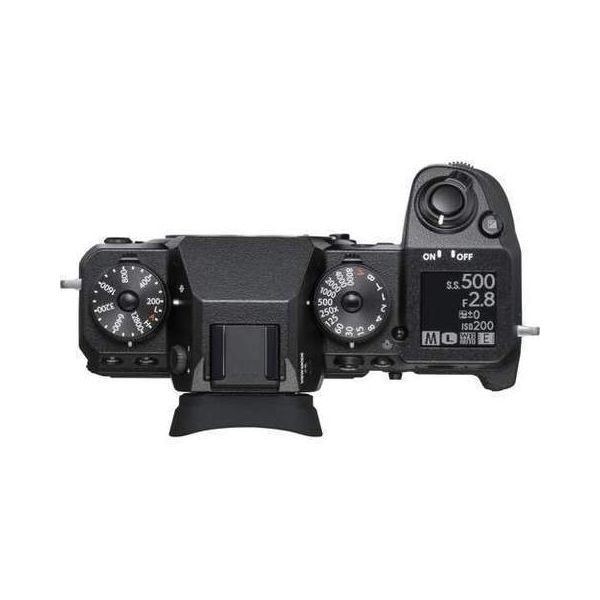
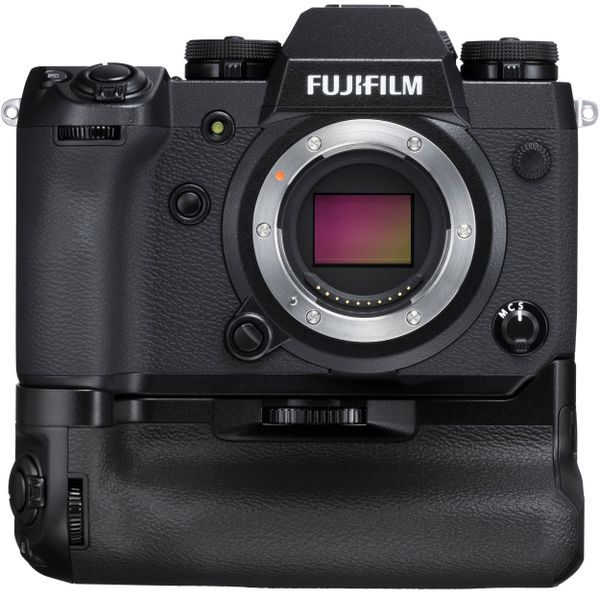
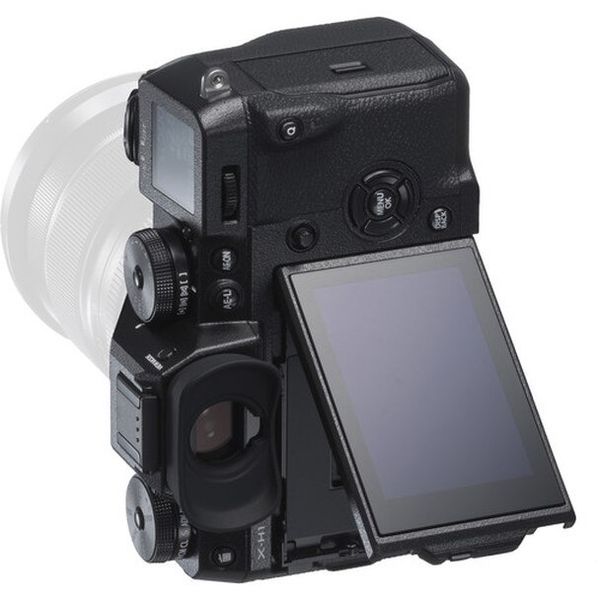
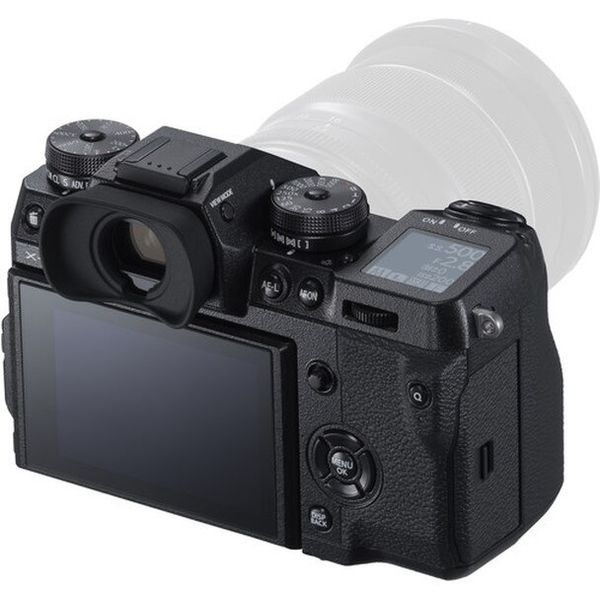

The X-H1 is an impressive addition to Fujifilm's X-Series of mirrorless cameras, featuring several ground-breaking features designed to meet the requirements of the more serious photographer.
Steady As You Go
A great photo needs a solid, shake-free foundation and the X-H1 helps you achieve that. In a first for an X Series camera, the X-H1 features in-body image stabilization for clear shots particularly with settings where camera shake can be a problem e.g. slow shutter speed or long focal length.
Updated Video
In another enhancement, video recording on the X-H1 has been updated. It now includes DCI/CINE-4K video recording for incredibly clear and detailed footage.
A Touch Of Hollywood
The X-H1 is the first in the X-Series to feature ETERNA. This mode gives your footage a cinematic feel, particularly with the way you view colours and shadows, and also gives you lots of ways to express yourself creatively during post-processing.
An Amazing Viewfinder
Many serious photographers prefer to take shots with their eye right on the viewfinder. The X-H1 makes this experience something special with an ultra-high resolution of its viewfinder plus 100% coverage of the frame.
Brilliant But Tough
The robust new body design on the X-H1 makes this camera the toughest of the X-Series models, thanks to 25% thicker magnesium alloy and 94 weather-sealed points.
Shot After Shot After Shot
The NP-W126S lithium-ion battery in the X-H1 delivers up to 310 frames per charge when used in normal mode.
A newer model Fujifilm X-H2S was released in June 2022.
Reviews
Show product page
With the X-H1, Fujifilm at long last adds in-body IS
In its new flagship APS-C model, Fujifilm's the last of the mainstream mirrorless camera makers to drift from optical stabilization to sensor shift. Essentially an update of the 2-year-old X-T2 -- the body's been refined and the feature set expanded for the cinema-shooting crowd -- the X-H1 has the distinction of being Fujifilm's first camera to incorporate sensor-shift image stabilization. It's more than late to a party where Sony, Olympus and Panasonic have already fallen asleep on the couch. But better late than never, and its five-axis, five-stop system is certainly a welcome upgrade to one of Fujifilm's best.
Fujifilm XH1 review
The Fujifilm X-H1 is the new flagship in the mirrorless X-series. It takes the X-T2 with its 24 Megapixel APSC X-Trans III sensor and adds built-in stabilisation (a first in the X-series), a touch-screen, tougher build, a bigger grip, enhanced movie features, a more detailed viewfinder, and...
The Fujifilm X-H1 is a great camera for shooting videos thanks to its variety of resolutions, frame rates, bit rates, film simulations, and aspect ratios, not to mention 5-axis IBIS and features like F-Log.
- Intended and designed for videographers and filmmakers, the X-H1 can shoot 4K video and offers a number of shooting modes, aspect ratios, and slow motion options
- It also has the 5-axis in-body image stabilization (IBIS), the cinematic Eterna film simulation, and an F-Log Gamma option for wider...
- One of the biggest letdowns we found in the X-H1 is its autofocus
- It's not that it's bad, but for the price, we expected more
- In fact, shooting a moving subject at AF-C almost always yields more than a couple of unfocused shots.

Fujifilm X-H1 Mirrorless Camera Review
Aimed at advanced and enthusiast photographers, the Fujifilm X-H1 ($1899, body only) has a 24MP APS-C sensor with 5-axis (5.5EV) image stabilization. We take a closer look at this mirrorless camera in this review.
Fujifilm X-H1 review: Does the most advanced X-series live up to its potential?
Fujifilm has created a worthy top-tier entry to its mirrorless X-series line-up with robustness, great image stabilisation and image quality. However, it can't surpass the Panasonic G9 in terms of ease-of-use, video and autofocus.- Excellent image stabilisation (although it's lens dependent for the best performance)
- Great image quality and detail potential (lens dependent)
- Robust build quality with full manual controls at your fingertips
- LCD top plate is a rare sighting on a mirrorless camera
- Large and capable viewfinder
- Tri-variable LCD screen
- Smallest autofocus size has issues acquiring focus
- Auto white balance and auto exposure sometimes off the mark
- No 3.5mm headphone jack without the battery grip
- Battery life should go further
- No image quality improvement over X-T2
- Panasonic G9 has greater video smarts

FUJIFILM X RAW STUDIO enables photographers to quickly and easily convert RAW files with outstanding image quality, once a camera is connected to a Mac or PC via USB cable. Exceptional image quality is retained, as the FUJIFILM X RAW STUDIO system utilizes the X-Processor Pro in the camera instead...

Fujifilm X-H1
The Fujifilm X-H1 takes a proven 24 megapixels X-Trans CMOS III sensor and fits it on a state-of-the-art 5-axis image-stabilization mechanism. While it falls short of the 5½ stops claimed in specifications, it delivers a solid 2½ stops of improvement over hand-holding any other Fujifilm mirrorless.- Very low image noise up to ISO 3200
- Wide dynamic-range
- Reliable metering
- Natural rendition of image colors
- Excellent automatic white-balance
- Instant shutter-lag with virtually no blackout
- Fluid ultra-sharp EVF
- Continuous AF at 14 FPS
- Plenty of direct controls
- Instant video response,...
- Occasional autofocus misses
- Limited stabilization
- Not Exposure-Priority
- Incorrect histogram in Live-View
- Complicated Shutter-Speed control
- Stacked dials move too easily
- Slow shot-to-shot speed
- Very short battery-life
- Quite bulky
- Pricey
- Soft aperture detents With all current XF-mount lenses

The Fujifilm XH-1, the latest incarnation in the popular X-series, isn't the successor to the popular X-T2 but it is the new X-series flagship. That said, the XH-1 is a somewhat confusing mirrorless beast.
- Great autofocus
- Solid
- tough build
- Great photos in JPEG
- Very good touchscreen LCD
- Good operating system
- Top LCD screen
- Too big and heavy for a mirrorless camera
- Doesn't sit well in the hand
- Pricey (1): For what it offers
- the XH-1 is just a little too expensive
- Pricey (2): Needs the Vertical Power Booster Grip + extra batteries
- Rendering of RAW photos at higher ISOs is questionable
- The APS-C X-Trans CMOS III...

I 'm not entirely happy. It's significantly heavier than the X-T2 and burns ...
I have an X-T2 but wanted the X-H1 primarily for the in-body image stabilization (IBIS). Several of my Fujinon lenses do not have OIS (optical image stabilization) and I thought this would be a way to get more hand-held use from those lenses.
Fujifilm X-H1 Review
The X-H1 is Fujifilm's most powerful and most refined camera yet. It is clearly the result of thoughtful work, a result of taking the time to get things right - at least, most things. But the X-H1 is hitting the market at the same time as many other impressive cameras.- Impressively well designed and built
- 5-axis in-body image stabilization
- Cinema 4K video at 200Mbps
- 3.69-million-dot electronic viewfinder
- Eterna film simulation
- Face detection AF can be unreliable
- Some audio bugs using external microphones

