
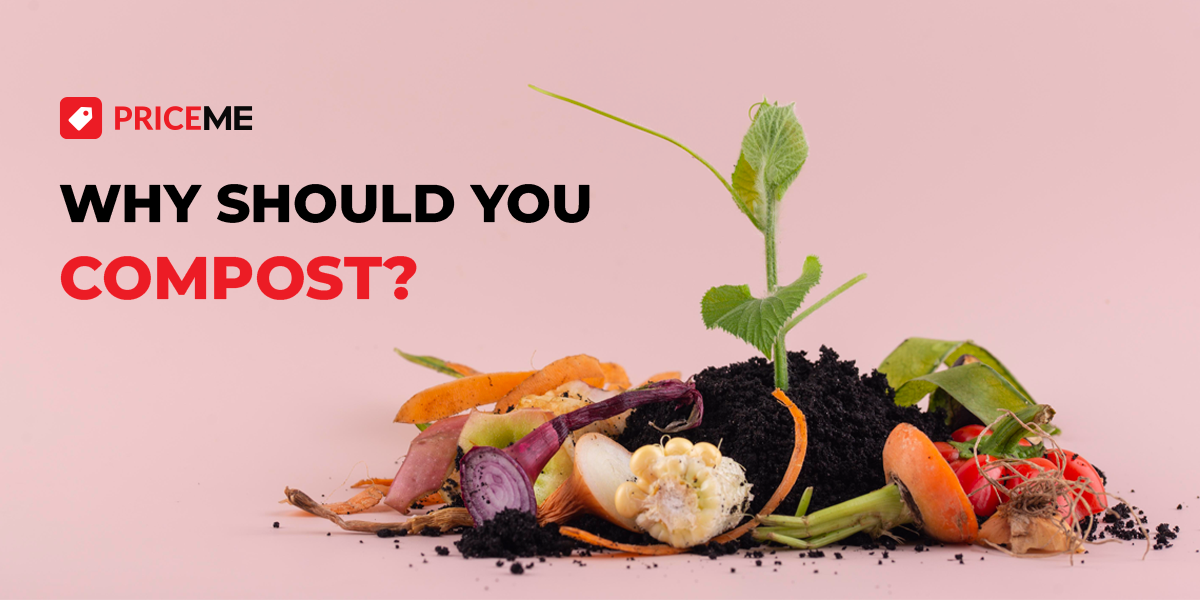


Many of us have heard that composting is a wonderful way to deal with your food waste. But what is all the fuss about? Why should you compost? Let’s break down the process of composting, and why it is a great component to add to your home.
What is Composting?
Composting is a natural way of recycling your food scraps. It diverts the waste from the landfill and returns the nutrients of organic waste back to the soil.
When you put your food scraps into the compost bin, the waste is broken down through an aerobic process, which uses oxygen to break down products. Microorganisms feed on the food scraps, such as banana peels and bread crusts, using carbon and nitrogen to grow and reproduce, and oxygen to breathe. This process converts organic materials into a nutrient-rich soil or mulch that you can use in your garden.
Why Should You Compost?
Compost is great for the environment because it breaks down food waste with the use of oxygen. This is a natural and clean way for organic waste to decompose. It doesn’t release greenhouse gasses such as carbon dioxide, like what would happen if the waste sat in a landfill.
The end result of the compost process is a nutrient-rich soil or mulch, that can feed your garden, and help you grow more yummy vegetables and fruits that you can use in your home-cooked meals. You could then use the inedible parts of your home-grown vegetables such as onion skins to add to your compost bin.
Composting is a wonderful continuous process that is kind to the environment, and can help you grow your vegetable garden, fostering a long-term solution to lowering your grocery bill.
What Do You Need to Start a compost?
A compost bin.
Jump on PriceMe to compare the different compost bins on the market. Be sure to choose a compost bin size that fits the amount of food waste your household creates, and the amount of outdoor space you have. There are various compost bin models on the market, so there will be one that suits your needs. If you are unsure, we have a compost bin buying guide to help you along the way.
Green matter and brown matter.
Add a mixture of green matter such as food waste and grass clippings, and brown matter, such as brown leaves into the compost bin.
Tips for Composting
- Pick a sunny spot in your outdoor space for the compost bin.
- Place the compost bin on the ground so small organisms in the soil can crawl into the compost bin to break down the waste.
- Add sticks and twigs to allow air to circulate.
- Turn the mixture regularly to allow air flow, such as once a week and use a shovel if the bin you choose doesn’t have its own turning mechanism.
- When the compost bin is full, don’t add any more food scraps but turn it regularly
- Your compost is usually ready to use in 6 to 8 months, once the mixture has turned into a brown, crumbly material where you can’t spot any food bits. You can harvest this material and add your garden to boost the growth and health of plants.