
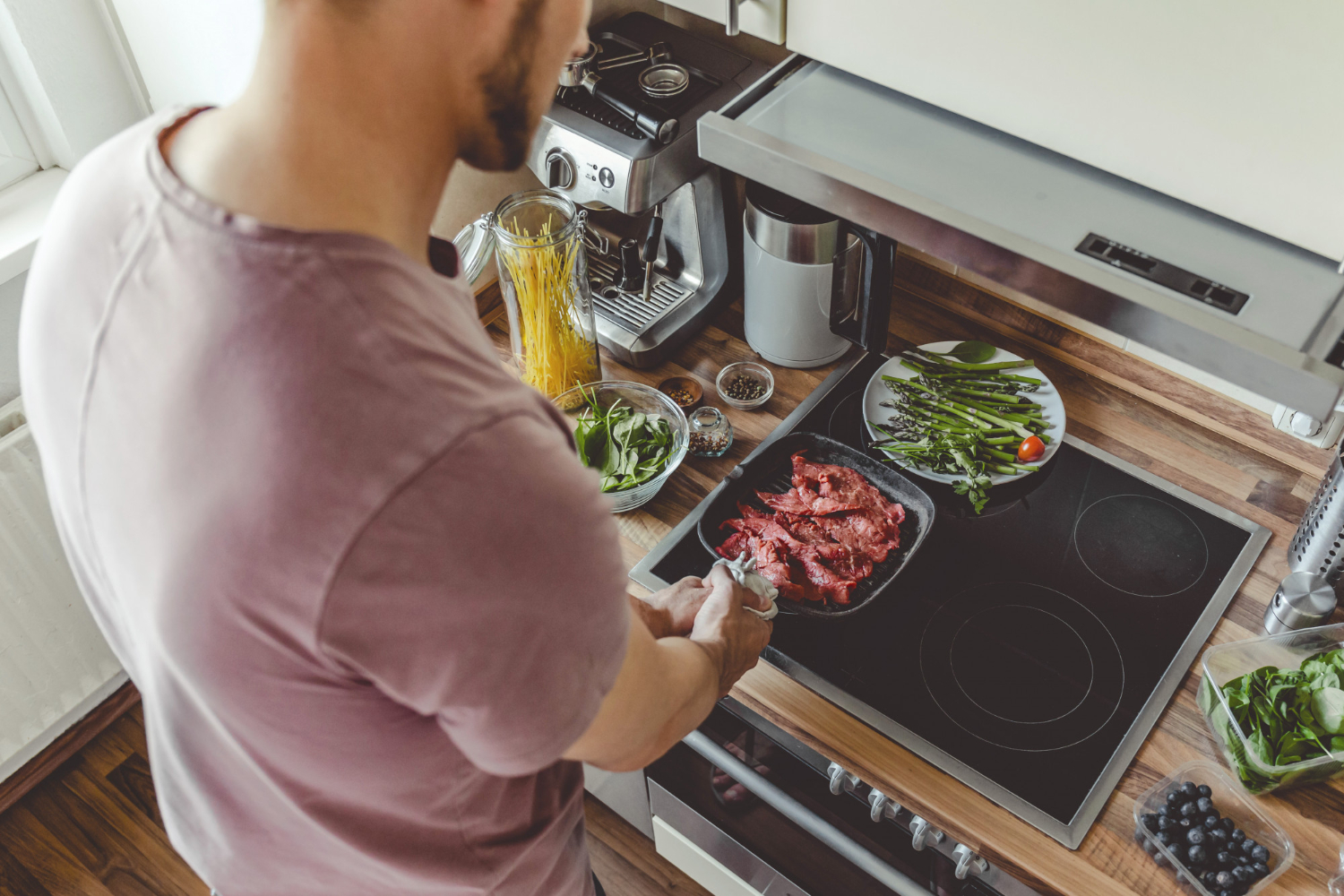


A cooktop, or a stove as it’s often called, is an essential component of the modern kitchen. If you are renovating your kitchen, or looking to upgrade your current configuration, it’s important to consider your new cooktop carefully, and the features that are most important to you. Remember, you can compare different cooktops models and prices to get the best deal on PriceMe.
Types of Cooktop
Radiant-ceramic Cooktops
Radiant-ceramic cooktops heat pots and pans via radiant heat, insulin heating elements installed under a flat ceramic surface. Sleek and low profile, these designs are easy to clean due to their flat and smooth surface. They’re also a lower cost option compared to induction cooktops.
Radiant-ceramic cooktops come with a few drawbacks. They can be slow to heat, but will stay hot for a while after the element is turned off. They are also susceptible to damage if a pot is dropped on it, and require specific cleaning products.
Induction Cooktops
Induction cooktops work by producing a high-frequency magnetic field. Heat is transferred to the material of your cookware, such as a steel-plated pan, within the magnetic field. The pan will heat up and directly cook your food.
These cooktops are fast to heat, and responsive to temperature adjustments. Induction cooktops are flat with touch-controls that make it easy to clean the surface. They also look sleek and stylish in kitchens.
Induction cooktops can be more expensive and can even be twice as expensive as ceramic options. You will also need to have magnetisable cookware. So you may need to upgrade your current pots and pans to make sure they will work, especially if your current set is copper or aluminium. It’s also important to make sure you have the correct pan size for the magnetic zone. Induction cooktops are often noisier. You may hear a hum that gets louder with higher settings, and a fan when the unit is cooling. It’s important to note that induction cooktops can be more expensive to install because they have special connection and ventilation requirements.
Gas Cooktops
Gas cooktops use an ignition system to ignite gas burners. These gas burners sit below the trivets where you will place your cookware and the burning gas will heat the pots and pans. You can use knobs to control how much gas is being burnt for low heat or high heat options. Gas cooktops are often used by professional chefs because it gives them better control over the heat. Gas cooktops are very fast at heating, and are responsive at changing temperatures. They distribute heat evenly and are great for all sorts of cooking styles from low simmering to high-heat stir-frying. You can also use all kinds of cookware for this cooktop.
There are a couple of drawbacks to consider with gas cooktops. They are not as easy to clean as other cooktop types, so they can get a little dirty if not regularly maintained. They also pose a safety risk because of the open flames. It’s important to remember to turn off the element properly to avoid gas leaks. Gas cooktops are also the least energy efficient of cooktops.
Size and Layout
You want to make sure you have cooking elements of varying sizes for versatile cooking needs. The cooktops typically come in three sizes (60cm, 70-75cm and 90cm), with three to six heating elements.
Layout will help make for a more efficient cooking experience, and improve safety. A layout that minimises the need to lean over will help you avoid getting burned from steam or oil splatters. Different cooktop types generally have different layout features.
For example, radiant-ceramic models can sometimes have a dual element. This means that there is a small element, within a larger element that can be turned on separately - great for versatility!
Induction cooktops can sometimes have flexi-zone cooking zones, where two or more cooking elements combine for cooking with larger pans.
Gas cooktops generally come with four burners. They may also have a wok burner located at the front for stirring safely. Others may even come with an oblong shaped burner, great for large pans or deep fryers and grills.
Controls
Check the control layout. They should match the element and be far enough away from the elements that you won’t burn yourself when using them. Any control knobs should be easy to grab and have a pointer. Choose knobs that require being pushed down to turn on is a good way to avoid accidentally turning on elements. Ideally, go for etched labelling over painted labels to prevent them being washed off. Etched labels should feel flat when you run a finger over them.
Retrofit
For retrofitting a new cooktop into your existing kitchen, it’s important to consider space and ventilation requirements. Also consider the requirements of the cutout aperture.
Safety Features
There are a few safety features you should consider depending on your household needs.
- Child lock: Prevent the kids from turning on the elements with a child lock.
- Auto switch-off: Element will switch off after a pre-set time if it isn’t in use.
- Safety sensors: Monitors the temperature of the bottom of cookware, and adjusts the power output if there is an empty pan left on a running element. Prevents damaging cookware and fire.
- Overflow protection: Element will turn off if a pot overflows. Simply clean the overflow and turn the element back on.
- Flame-failure protection: If the flame goes out on your gas cooktop, the flame-failure protection will turn off the gas or reignite the flame to prevent gas leaking into your home and becoming a health and safety hazard.
Helpful Features
- Memory: programme a full cooking cycle.
- Flexi-zones (bridge-function): one or more elements can be joined to create one large cooking zone, ideal for large rectangular cookware.
- Auto heat-up: After reaching a high heat for a certain amount of time, the element will automatically cool down to a pre-set level. This is great for bringing to a boil, and then simmering, such as for the absorption method when cooking rice.
- Timers: Each element can come with a timer.
Compare Cooktops
The best way to find the right cooktop at the best price is to jump on PriceMe and compare cooktops. Our user-friendly platform makes it easy to compare models, product descriptions and prices. Don’t pay for more than you need to. It takes just minutes to compare and can empower you to find the best deal for your new cooktop. Don’t miss out on the chance to find the best deal and cooktop for your unique cooking needs!